
Baked Lobster Tails with Garlic and Herb Butter

Baked Lobster Tails with Garlic and Herb Butter
Plantin Kaviari
2
20 minutes
French
Festive Main Course
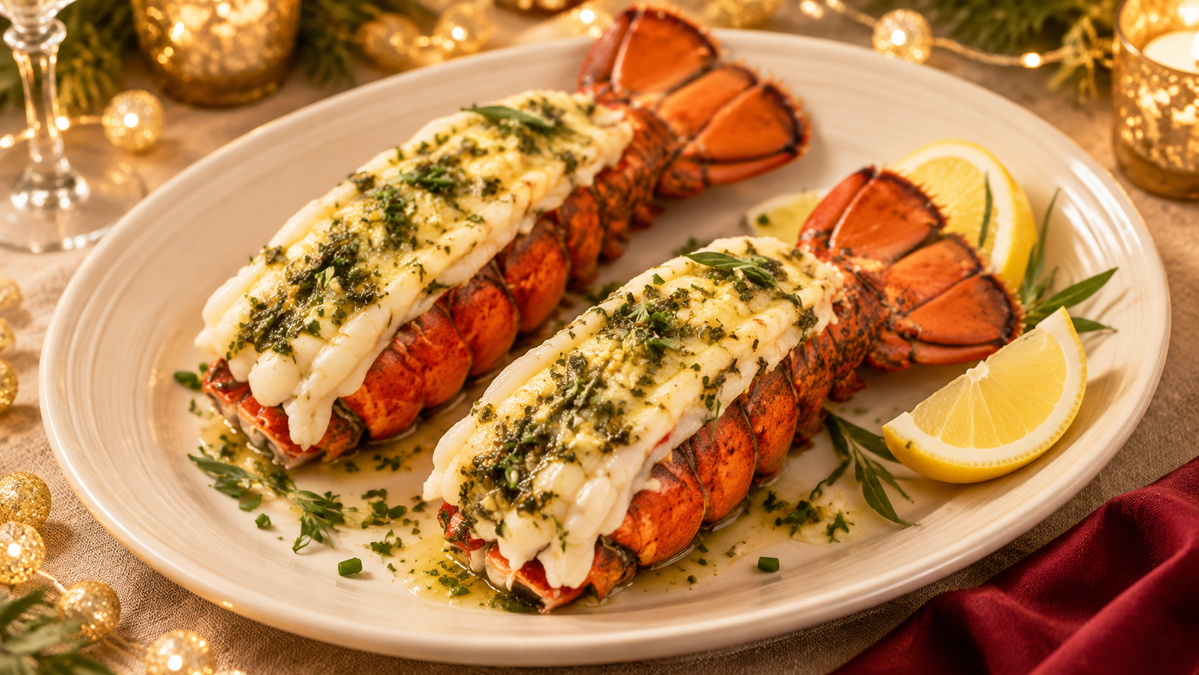
Qwehli European Blue Lobster tails are butterflied and topped with a fragrant garlic, chive and tarragon butter before baking. Serve with your favourite sides for an elegant dinner for two, and save the heads and claws for another recipe.
Ingredients
- 2 tails from Qwehli Frozen European Blue Lobsters
- 75 g unsalted butter, softened
- 2 small garlic cloves, finely minced
- A pinch of sweet paprika
- 1 tsp finely grated lemon zest
- 1 tsp lemon juice, plus lemon wedges to serve
- 1 tbsp finely chopped fresh chives
- 1 tsp finely chopped fresh tarragon
- Fine sea salt and freshly ground black pepper, to taste
Directions
- Thaw the lobster
For refrigerator thawing, place the lobster in a dish to catch any liquid and allow approximately 24 hours, or until fully thawed. Follow any instructions about opening or removing the packaging before thawing.
For a quicker method, where permitted by the packaging instructions, place the lobster in a leakproof bag and immerse in water, change the water once, if needed. Cook immediately after thawing this way. - Preheat the oven
Preheat the oven to 180°C fan. Prepare a small baking dish or rimmed baking tray. - Make the garlic and herb butter
Mix the softened butter with the garlic, paprika, lemon zest, lemon juice, chives and tarragon. Season lightly with salt and pepper. - Butterfly the tails
Using sharp kitchen shears, cut along the centre of the upper shell, stopping just before the tail fin. Do not cut through the bottom shell or tail fin.
Gently ease the shell open. Loosen the meat from the sides and underside, leaving it attached at the tail fin. Remove the dark digestive tract if present.
Carefully lift the meat out, bring the shell sides together underneath, and rest the meat on top. This is the standard presentation used for butterflied baked lobster tails. - Add the butter
Arrange the tails shell-side down in the baking dish. Spread the garlic and herb butter evenly over the exposed meat. - Bake
Bake for approximately 10-15 minutes, checking from 8 minutes if the tails are small.
The lobster is ready when the flesh is firm, pearly white and opaque, and the thickest part reaches 63°C. Insert the thermometer into the meat without touching the shell. - Serve
Spoon the melted butter from the baking dish over the tails and serve immediately with lemon wedges.
Recipe Note
Why are we only using the tails?
This recipe uses only the lobster tails. Qwehli European Blue Lobsters come already separated into tails, heads and claws, making it easy to use the different parts in separate preparations.
Reserve the claws for a lobster pasta, salad or another dish once cooked, and use the cleaned heads and empty shells for a stock, bisque or lobster butter.
How can I tell when the lobster is cooked?
The flesh should be firm, pearly white and opaque throughout. A thermometer reading of 63°C in the thickest part is the clearest check. Do not rely on shell colour alone.
What should I serve with lobster?
For this butter-rich version, I’d choose one simple side and something fresh:
Risotto and a lightly dressed green salad
Roasted baby potatoes and green vegetables
Truffle French fries and a tomato–basil salad
Crusty bread to soak up the garlic butter
What is the green substance inside the lobster?
It is called the “Tomalley”. This is the lobster’s liver and pancreas. It is edible and some are especially fond of it. However, health agencies recommend eating it in moderation because it can accumulate environmental toxins.


